Lost Lands 4
FIVE-BN GAMESAdventure
4.71.40K Reviews
- Version
- 2.0.2.1597.191
- Installs
- 1.00M
- Age Rating
- Everyone 10+
Screenshots
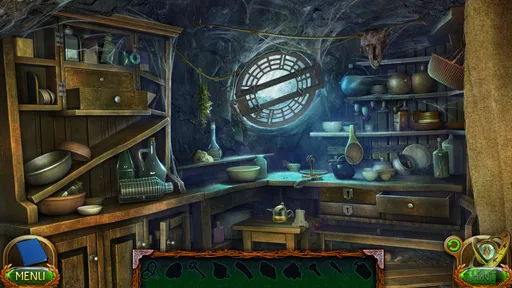
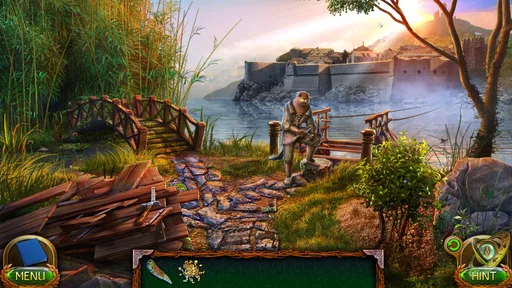
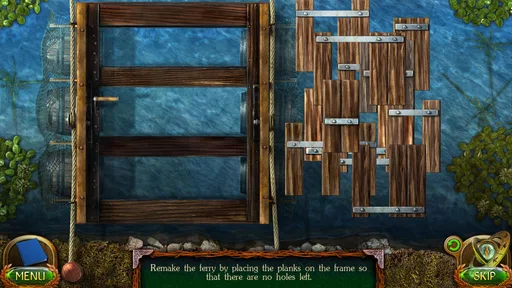
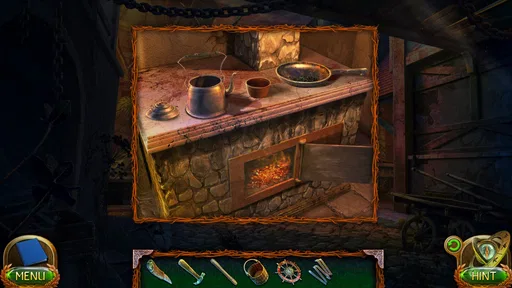
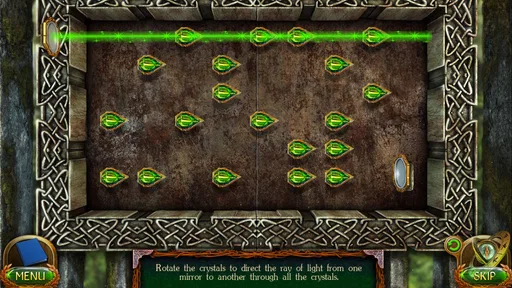
Our Review of Lost Lands 4
 Analysis by Appyee
Lost Lands 4 is the kind of adventure game I recommend when I want a story-led puzzle experience rather than a quick arcade distraction. I play as someone drawn into a dangerous situation involving a captain and a much larger threat, and the appeal comes from investigating strange places, examining objects, and working out how separate clues fit together. It is free to start, rated Everyone 10+, and developed by FIVE-BN GAMES.
My first impression was that this is best approached slowly. The game expects me to look carefully, remember details, and try solutions instead of rushing from one action to the next. That makes it a comfortable choice for a quiet evening or a few thoughtful sessions, but less suitable if I only want instant action. Its average rating is 4.7 from around 70 thousand ratings, and it has passed over 1 million installs, which fits the experience: this is a well-established choice for players who enjoy visual adventures with puzzles at the center.
What to expect when the journey begins
The opening is built to establish a mystery and give me a reason to keep exploring. The central goal is not simply to reach the next screen; I need to understand what is happening, help the captain, and gradually uncover how the wider danger connects to the places and objects around me. That structure gives each discovery more weight than a random collection of mini-games.
The game’s strongest quality is its sense of investigation. I move through scenes, inspect details, collect useful items, and test relationships between things that initially seem unrelated. A tool may belong to a mechanism, a symbol may explain a locked container, and an apparently decorative object may become important later. I found that the most satisfying moments came from recognizing a pattern myself rather than merely tapping through a checklist.
This also means the game rewards a particular kind of attention. I would not play it while watching a show or answering messages, because its clues can be easy to forget when my concentration is divided. On the other hand, the slower rhythm works well when I want something more absorbing than a casual matching game but less demanding than a fast combat adventure.
The presentation supports the mood without turning the experience into a technical showcase. The environments are designed to make me inspect them, and the story gives context to the puzzles instead of treating them as disconnected obstacles. I especially appreciate that the adventure has a clear sense of purpose: helping the captain and protecting the world provide a stronger motivation than simply collecting points.
There is also a useful difference between this and many ordinary mobile alternatives. A typical casual puzzle game lets me repeat a familiar action until the session ends. Lost Lands 4 asks me to build a mental map of the situation. If I enjoy hidden-object adventures, story puzzles, and games where observation matters more than reflexes, that is a real advantage. If I prefer constant rewards, competitive scores, or short rounds with no plot, the same design may feel slow.
How I approach the first setup
The game supports Android devices running version 7.1 or later, and the current version is 2.0.2.1597.191. I would check compatibility before installing, particularly on an older phone or tablet. The game itself is free, so there is no purchase required just to begin the adventure. Optional in-app purchases range from $0.99 to $14.99 per item, which is worth remembering before handing the device to a younger player.
Because the age rating is Everyone 10+, I see it as a reasonable family-friendly option for older children and adults, although the mystery and danger may appeal more to players who already enjoy suspenseful stories. I would still let a child know that optional purchases exist. The free entry point makes it easy to try, but “free” should not be confused with a completely purchase-free experience.
After installation, my practical advice is to begin with a clear screen and a little uninterrupted time. I keep the device brightness comfortable and avoid switching rapidly between apps. This sounds basic, but it matters in a game where a small visual detail can be the key to the next action. I also resist tapping every object immediately. I first look at the whole scene, then examine anything that appears unusual.
One helpful habit is to treat the inventory as a set of questions rather than a storage box. When I receive an item, I ask what problem it might solve, what shape or symbol it resembles, and which location I have already visited that contains a matching detail. This prevents the common mistake of wandering randomly through every available area.
I also recommend playing in short, deliberate sessions instead of trying to finish a large section in one sitting. When I stop, I make a mental note of the last unresolved obstacle and the objects connected to it. That simple pause makes returning easier and reduces the temptation to repeat every action from the beginning.
The first meaningful success
For a first-time player, the first real success is not merely opening a door. It is understanding the game’s logic: observe the scene, identify a clue, connect it to an object, and use the result to move the story forward. Once that loop becomes familiar, the adventure feels much less intimidating.
I usually begin by scanning the entire location before touching anything. I look for unusual markings, containers, mechanisms, fragments, and areas that seem deliberately highlighted by the composition. Then I inspect objects one at a time and pay attention to what changes. A clue is often more useful when combined with something already in my inventory, so I avoid assuming that every item has an immediate purpose.
When I get stuck, I do not immediately repeat the same tap sequence. Instead, I divide the problem into three parts: what I know, what I possess, and what remains inaccessible. If I know a symbol but cannot find its matching mechanism, I search previously visited locations. If I have an item but no obvious use, I inspect the scene again for a shape, opening, or pattern that could accept it.
This method is especially useful in a realistic everyday situation. Imagine playing after dinner, reaching a puzzle that seems obvious but not quite solvable, and then needing to stop for the night. Rather than abandoning the game, I note the visible symbols and the unused inventory item, close the session, and return later. The solution often becomes clearer with fresh attention. That is one reason I prefer this kind of adventure to games that punish me for taking a break.
Another concrete tip is to avoid spending a hint simply because I feel impatient. I first revisit every accessible scene and check whether I overlooked a clickable detail. A hint is most valuable after I have genuinely narrowed the possibilities. Used too early, it can turn a satisfying deduction into a routine instruction; used after careful searching, it can help me recover without making the whole experience effortless.
The game also rewards remembering visual relationships. If two locations share a symbol, color, shape, or mechanical idea, I treat that as intentional. I do not need to write down every detail, but I do keep track of repeated patterns. This is a small but important difference from basic hidden-object games, where finding the item is usually the entire task.
Where new players commonly get confused
The biggest source of friction is not the story; it is knowing what deserves attention. Adventure scenes can contain many attractive details, and I sometimes spend time examining something that looks important but has no immediate role. The answer is not to tap more quickly. It is to compare the scene with the problem I am trying to solve and focus on objects that offer a plausible connection.
Inventory management can also be confusing at first. I may collect an item and assume I should use it immediately, then waste time searching for a matching location. In my experience, it is better to accept that some objects are future clues. I keep them in mind, but I do not let one unused item dictate my entire route.
Another mistake is forgetting that progress can depend on returning to an earlier area. When a new discovery changes the situation, I check familiar locations again instead of assuming that only the current screen matters. This backtracking is part of the design, not necessarily a sign that I have taken the wrong path.
Some players may also wonder whether the game is suitable for a child. The Everyone 10+ rating gives a useful general guide, and the adventure format is less focused on realistic combat than many action games. Still, the mysterious atmosphere and danger in the story mean I would choose it for a child who already enjoys suspenseful puzzles, rather than for someone looking only for cheerful, very simple play.
It is equally important to understand what this game is not. It is not a replacement for a fast platformer, a competitive multiplayer title, or a game designed around repeated daily rounds. There is no reason to choose it for reaction speed or social competition. I would skip it if my priority were constant movement, leaderboards, or a very short session that can be completed without remembering anything.
The free-to-play structure deserves a practical note as well. Starting without payment is convenient, especially when I am unsure whether the style suits me. However, optional items priced from $0.99 up to $14.99 can affect how I manage the experience. I prefer to decide in advance whether I am willing to buy anything, rather than making a rushed purchase after getting stuck. For many players, the best approach is to treat the free start as a trial and judge the value personally before spending.
How it compares with familiar adventure alternatives
Compared with a simple hidden-object game, Lost Lands 4 gives me more reason to care about what I find. Objects are not only targets to locate; they are part of a broader chain of investigation. That makes the experience more memorable, though it also requires more patience and memory than a game where every scene can be cleared independently.
Compared with a traditional point-and-click adventure, it feels more approachable on a phone. The interactions are designed around examining scenes and solving focused problems, so I do not need the same tolerance for obscure dialogue choices or long stretches of wandering. Still, it keeps the satisfying point-and-click habit of testing ideas and revisiting places after learning something new.
Compared with action-oriented adventure games, this one is calmer and more cerebral. I can play without mastering combat controls or reacting to enemies in real time. The trade-off is that progress depends on my reasoning. A player who enjoys discovering a solution will likely find that rewarding; a player who wants the game to carry them from one spectacle to the next may lose interest.
That comparison helps me decide who should install it. I would recommend it to someone who likes atmospheric stories, visual clues, and puzzles that connect across locations. I would also suggest it to a player looking for an offline-style, personal adventure rhythm rather than a competitive mobile routine. I would point a different game toward someone who wants multiplayer interaction, rapid action, or a completely linear experience with no backtracking.
The next step after the opening
Once I understand the basic investigation loop, I stop treating each puzzle as an isolated challenge. I begin building a running theory of the world: which characters need help, which places are connected, and which objects might belong to the same mechanism. This makes later decisions more deliberate and reduces the feeling of randomly trying combinations.
My preferred workflow is simple. I explore the current area carefully, collect anything that appears useful, test only logical combinations, and then revisit earlier locations when a new clue suggests it. If nothing works, I change the question rather than repeating the same action. Instead of asking, “What can I tap here?” I ask, “What information am I missing?” That shift often reveals whether I need another location, another item, or a closer look at a symbol.
I also keep expectations realistic about the pace. The game is more enjoyable when I allow a puzzle to remain unresolved for a while. Taking a break is not a failure; it is a useful strategy for this format. When I return, I often notice a relationship that was visible before but did not make sense at the time.
For readers concerned about device age, the minimum operating system is Android 7.1, so compatibility is the first practical check. For everyone else, the more important question is whether the investigation style matches their habits. The game is free to begin and has a broad audience, but its value comes from attention and curiosity rather than from speed.
After spending time with it, I see Lost Lands 4 as a strong recommendation for patient puzzle-adventure fans. FIVE-BN GAMES has shaped it around a clear journey, a captain in need, and a world-scale problem that gives the exploration purpose. The experience is not perfect for every player: backtracking can slow the pace, some clues demand careful observation, and optional purchases mean I would set spending boundaries before playing.
Even with those limitations, I like how the game turns a phone into a compact mystery to solve at my own rhythm. My main advice is to observe first, connect clues second, and use help only after a genuine attempt. If that sounds more appealing than quick rounds or constant action, this free adventure is well worth trying. It gives first-time players a reassuring path from installation to meaningful progress, while leaving enough room for careful players to feel that they solved the world rather than simply passed through it.
Verdict
Strengths of Lost Lands 4
- Atmospheric locations make exploration feel immersive.
- Hints help prevent difficult puzzles from becoming frustrating.
- The inventory system is simple and easy to understand.
- Optional collectibles add extra goals for completionists.
- Works well for relaxed, offline point-and-click play.
Limitations of Lost Lands 4
- Some puzzles rely on trial and error rather than clear clues.
- The story can feel predictable if you have played earlier entries.
- Backtracking between locations becomes repetitive at times.
- The bonus content may feel limited for players seeking more gameplay.
- Small interactive objects can be easy to overlook on mobile screens.
Other Releases by FIVE-BN GAMES
View All


Similar Picks in This Category
View All
Roblox
Roblox Corporation4.2

Pokémon GO
Niantic, Inc.3.5

Ninja warrior: legend of adven
TOH Games4.6

Ninja Arashi
Black Panther4.6

Eyes - The Horror Game
Fearless Games sp. j.4.5

Critical Action:Gun Strike Ops
FPS Shooter & Action Game4.3
Frequently Asked Questions
What is Lost Lands 4 about?
Lost Lands 4 is a story-driven hidden-object adventure game in which Susan returns to the fantasy world of Lost Lands to face a dangerous new threat. The game combines exploration, puzzle solving, item collection, and conversations with memorable characters. Its narrative is designed to be played in sequence, so understanding earlier events can make the story and character motivations easier to follow.
How does the gameplay in Lost Lands 4 work?
The main gameplay loop involves exploring beautifully illustrated locations, searching for hidden objects, collecting useful items, and solving environmental puzzles. You must often combine objects or use them in the correct place to progress. There are also logic-based mini-games and story interactions, so the experience is more focused on careful observation and problem solving than on fast action or combat.
Is Lost Lands 4 suitable for beginners?
Yes, Lost Lands 4 is generally accessible to beginners, especially for players who enjoy casual adventure games. The objectives are introduced gradually, and the game provides a hint system that can help when you are unable to find an object or determine what to do next. However, some puzzles require patience and experimentation, so players looking for a completely effortless experience may occasionally find the progression challenging.
Can Lost Lands 4 be played offline?
Lost Lands 4 is primarily a single-player adventure and much of the gameplay can usually be enjoyed without a constant internet connection after the necessary game files have been installed. An internet connection may still be required for downloading the application, receiving updates, restoring purchases, or accessing certain platform services. Availability of offline features can vary slightly between the Android and iOS versions.
Does Lost Lands 4 include in-app purchases or advertisements?
The game may be offered as a free download with optional purchases, depending on the version and store region. Some editions can include advertisements, while purchases may unlock the complete adventure or provide additional content. Before downloading, it is worth checking the current Google Play or App Store listing for the exact pricing model, included chapters, advertising policy, and whether the full game requires a separate payment.
Play our best games!


